Why <a href="https://www.mobileboatmechanic-capecoral.com/marine-plumbing/">Marine Plumbing</a> Deserves More Attention Than It Gets
Most boat owners focus on engines, electronics, and hull condition — but marine plumbing is quietly one of the most failure-prone systems on any vessel. From raw-water cooling lines and bilge pump hoses to head systems and livewells, the network of hoses, fittings, thru-hulls, and seacocks running through your boat is constantly exposed to saltwater, vibration, heat, and UV degradation. In Southwest Florida’s warm, year-round boating climate, these components age faster than in cooler regions, and a single failed fitting can mean anything from a flooded bilge to a sinking boat at the dock.
Common Marine Plumbing Problems on Florida Boats
Understanding what typically fails helps you catch problems before they become emergencies.
**Thru-hull fittings and seacocks** are among the most critical components. Bronze fittings can dezincify over time, becoming brittle and prone to sudden failure. Seacocks that haven’t been exercised regularly can seize open or closed — a serious problem if you need to stop water ingress fast.
**Raw-water cooling hoses** on inboard and sterndrive engines run hot and are constantly flexing with engine vibration. Hoses that feel stiff, show surface cracking, or have soft spots near the clamps are overdue for replacement.
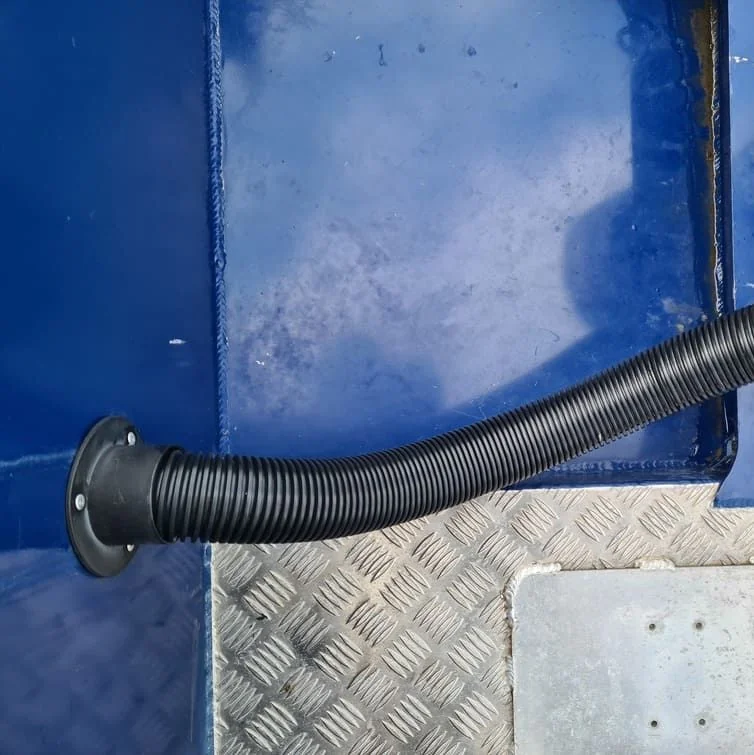
**Bilge pump discharge lines** are often overlooked. A kinked or clogged discharge hose means your bilge pump runs but accomplishes nothing — a dangerous situation during heavy rain or after a wave comes aboard.
**Marine head and holding tank plumbing** is notorious for odor problems caused by permeated hoses. Sanitation hose has a limited service life, and once odors penetrate the hose walls, cleaning alone won’t fix the smell. Replacement is the only real solution.
How Cape Coral's Waterways Accelerate Wear
Cape Coral sits at the intersection of freshwater canals and open saltwater access to the Gulf and Charlotte Harbor. Boats that move between brackish canals and full-salt open water experience fluctuating mineral exposure that accelerates corrosion on metal fittings and degrades rubber hose compounds faster than either environment alone would.
The intense Florida sun also plays a role. Hoses and fittings in engine compartments that aren’t well-insulated can reach extreme temperatures, causing rubber to harden and lose flexibility. After summer storm season — when boats may have sat unused for weeks or been exposed to flooding — it’s worth doing a thorough inspection of every hose clamp, fitting, and seacock before heading back out.
What a Mobile Marine Mechanic Checks During a Plumbing Inspection
One of the advantages of a mobile marine mechanic coming to your dock or marina slip is that the boat stays in its natural environment. Plumbing issues that only appear when the vessel is in the water — like a slow seep around a thru-hull or a bilge that fills overnight — are much easier to diagnose afloat than on a trailer in a boatyard.
A thorough inspection typically covers:
- **Thru-hulls and seacocks** — checking for corrosion, dezincification, and full range of motion
- **All raw-water hoses** — squeezing for stiffness, checking for cracks and proper double-clamping below the waterline
- **Bilge pump system** — testing the pump, float switch, and verifying the discharge line is clear and properly routed
- **Head and holding tank connections** — inspecting for leaks, checking vent lines, and assessing hose condition
- **Engine cooling circuit** — confirming the impeller housing connections and heat exchanger fittings are secure and leak-free
Catching a failing hose clamp or a weeping thru-hull at the dock is far less expensive than dealing with the consequences on the water.
Preventive Maintenance That Keeps You Boating
The best approach to marine plumbing is a scheduled inspection rather than a reactive repair. Most marine mechanics recommend a full plumbing check at the start of each boating season, with a secondary look after any major storm event or extended period of non-use.
A few practical habits make a real difference:
- **Exercise your seacocks** by opening and closing them fully every few months to prevent seizing.
- **Replace hose clamps** showing any rust or white corrosion — these are inexpensive and a corroded clamp is a liability.
- **Check your bilge regularly** after rain or rough water. Water that shouldn’t be there is always worth investigating.
- **Use sanitation hose rated for marine applications** — standard plumbing hose permeates quickly in a marine environment.
For boat owners in Cape Coral and throughout Southwest Florida, the convenience of a mobile mechanic means you don’t have to arrange a haul-out or lose days of boating time to get this kind of work done. A few hours at your slip can prevent the kind of failure that ruins a trip — or worse.