Why Southwest Florida Demands a Different Approach
Owning a boat in Cape Coral means you’re surrounded by one of the most extensive canal and waterway networks in the United States — and that’s exactly why consistent boat maintenance is so critical here. Unlike seasonal boating regions where vessels sit idle for months, Southwest Florida’s warm climate keeps boats in the water nearly year-round. That constant use, combined with saltwater exposure, high humidity, and the occasional tropical storm, accelerates wear on virtually every system aboard. Staying ahead of problems isn’t just about convenience; it’s about keeping your boat safe and avoiding the kind of catastrophic failures that sideline you for weeks.
The Most Common Maintenance Issues in Saltwater Environments
Salt is the great equalizer — it doesn’t care how new or expensive your boat is. In a saltwater environment like the Gulf Coast and the interconnected canals of Lee County, corrosion attacks electrical connections, raw-water cooling passages, and metal fittings faster than most owners expect.
Here are the areas that demand the most attention in this region:
- **Raw-water cooling systems:** Impellers degrade and raw-water passages accumulate mineral deposits. A failed impeller can overheat an engine in minutes.
- **Electrical systems:** Salt spray corrodes terminals and wiring insulation. Intermittent electrical gremlins are one of the top reasons boats get stranded at the dock.
- **Anodes (zincs):** Sacrificial anodes protect underwater metal components from galvanic corrosion. In active waterways, they deplete faster than manufacturers’ general guidelines suggest.
- **Fuel systems:** Ethanol-blended fuel absorbs moisture and degrades rubber fuel lines and gaskets. Phase separation is a real risk, especially in boats that sit between uses.
- **Outboard and sterndrive lower units:** Gear oil should be inspected regularly for water intrusion, which signals a failed seal before it becomes a destroyed gearcase.
Seasonal Patterns That Should Drive Your Maintenance Schedule
Even in a warm climate, there are predictable demand spikes that smart boat owners plan around. Spring and fall are peak boating seasons in Southwest Florida — the weather is ideal, fishing is excellent, and waterways are busy. These are also the times when deferred maintenance comes back to bite owners who skipped service during the slower summer months.
Summer brings heat, afternoon thunderstorms, and reduced use for many boaters. This is actually the ideal window to schedule engine service, bottom paint, and electrical inspections — before fall demand makes marine mechanics harder to book. After significant storms, it’s worth checking bilge pump function, through-hull fittings, and any exposed wiring or connections that may have taken on water or debris.
A practical seasonal checklist looks something like this:
- **Spring:** Full engine service, impeller replacement, safety equipment audit, battery load test
- **Summer:** Bottom inspection, anode replacement, fuel system check, electrical system review
- **Fall:** Pre-season engine check, steering and throttle cable inspection, cooling system flush
- **After storms:** Bilge pump test, through-hull inspection, electrical connection check
Why Mobile Marine Mechanics Make Sense for Cape Coral Boat Owners
Trailering or hauling a boat to a fixed boatyard is a major logistical undertaking — and for many Cape Coral residents, it’s simply impractical. Boats stored in canal-front backyards, private docks, or marina slips can’t always be easily moved, and the cost and downtime of a haul-out adds up quickly.
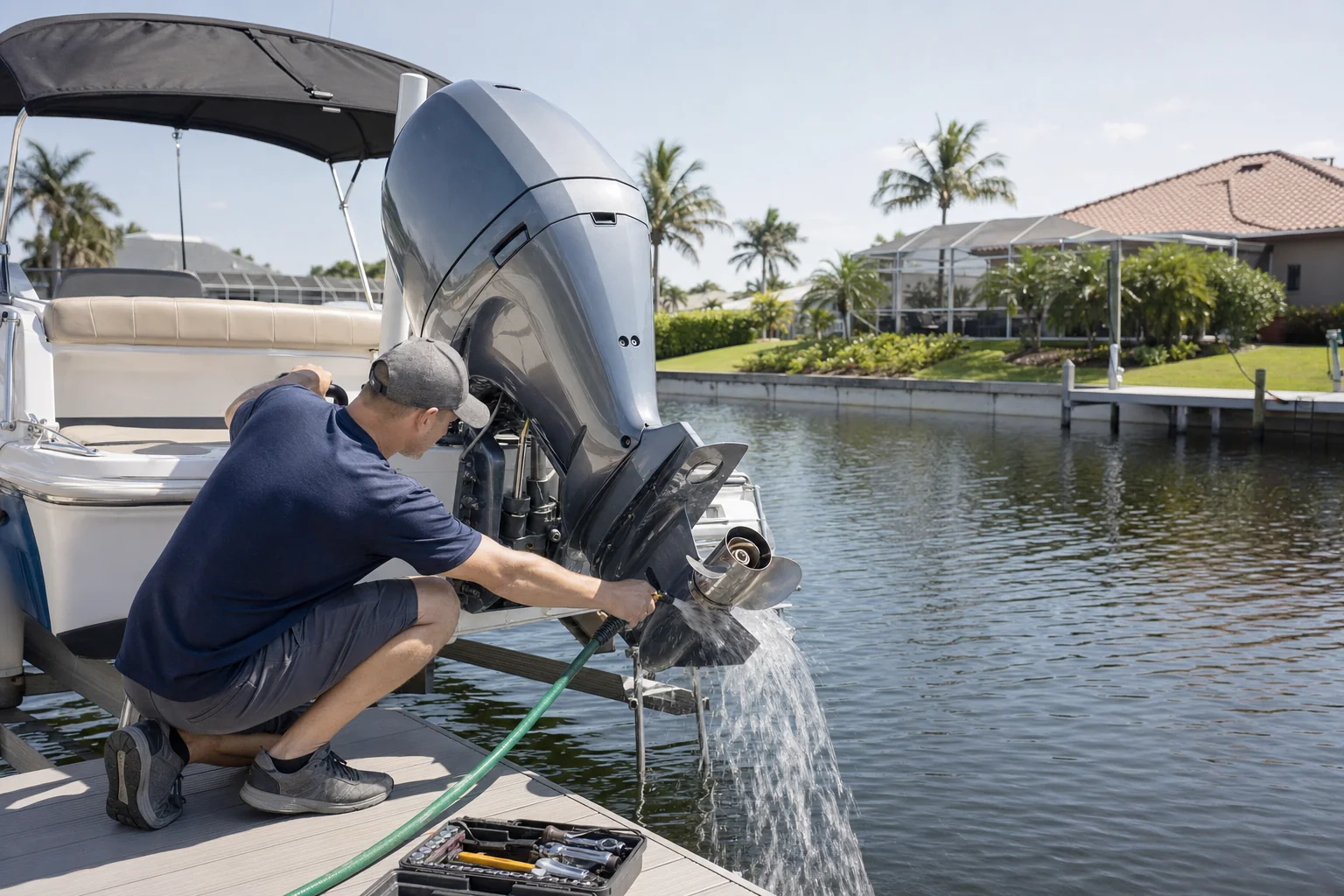
Mobile marine mechanics eliminate that friction entirely. A qualified technician travels directly to your dock, slip, or storage location with the tools and parts to diagnose and repair most issues on the spot. For engine diagnostics, impeller replacements, electrical troubleshooting, fuel system repairs, and routine service, there’s no reason the boat needs to leave the water at all. This approach saves time, reduces stress, and often gets you back on the water faster than the traditional boatyard model.
For boat owners in Cape Coral and the surrounding waterways, having a trusted mobile mechanic’s number saved is as essential as having a good anchor.
Building a Proactive Maintenance Mindset
The most expensive repairs almost always trace back to deferred maintenance. A $30 impeller that isn’t replaced on schedule can become a $3,000 engine overhaul. A corroded battery terminal that isn’t cleaned can strand you in the middle of the Caloosahatchee River.
The best approach is simple: keep a maintenance log, set calendar reminders for seasonal service intervals, and don’t ignore small symptoms. Unusual engine temperatures, strange smells, sluggish throttle response, and bilge pump cycling more than normal are all early warning signs worth investigating before they become emergencies.
In a boating environment as active and demanding as Southwest Florida, proactive maintenance isn’t optional — it’s the difference between a great day on the water and a very expensive one.